Basic technological platform
- Dry Pyrolysis: a process without the formation of liquid pyrolysis products;
- Indirect heating during carbonization: prevents contact between the heat carrier and the feedstock, which is critical for process control;
- Drying agent for feedstock drying: use of excess process heat for efficient moisture removal from the feedstock; drying to <15% is a mandatory stage for achieving high charcoal strength and quality;
- Cycle balance: the drying time is 1.5-2 times longer than the pyrolysis duration, and this is already taken into account in each system configuration;
- Environmental safety: the primary thermal oxidizer and the hot cyclone (T > 1200°C) ensure complete neutralization of gases, ash decontamination, and the absence of harmful emissions.
Main elements of the MULTI-ECO complex
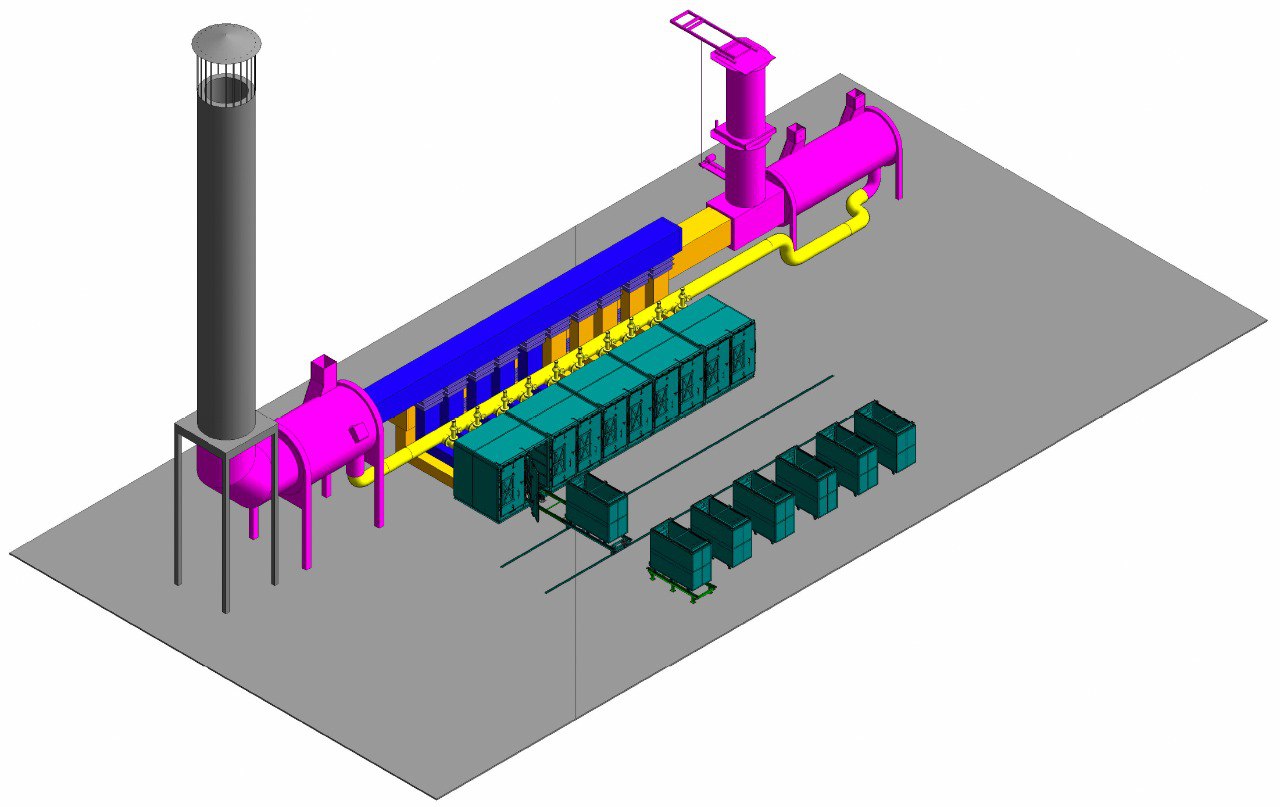
1. Primary thermal oxidizer – ensures complete neutralization of harmful substances;
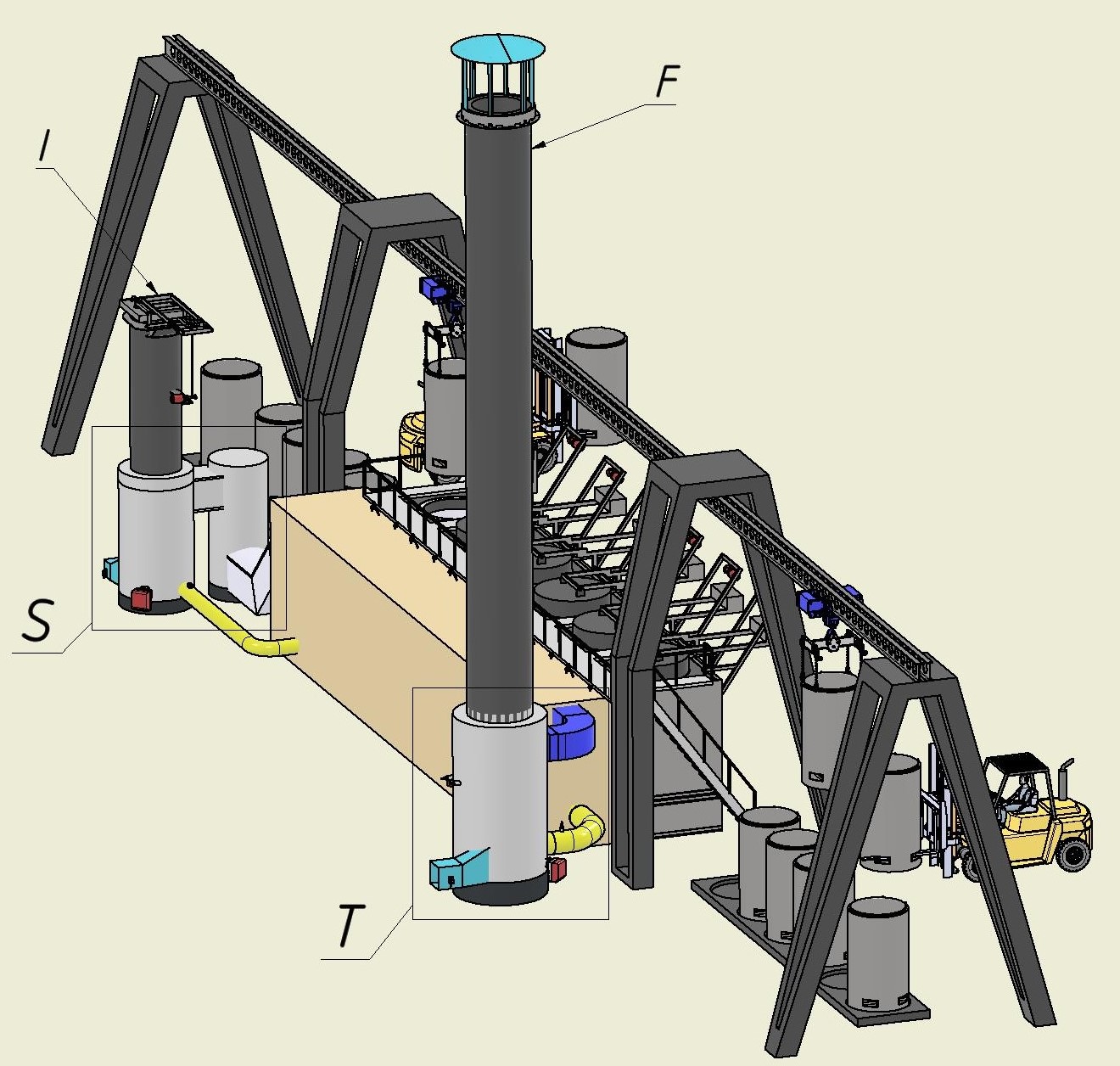
Primary thermal oxidizer — T and Secondary thermal oxidizer — S
2. Gas collector and system of primary and spent heat-carrier channels – for controlling vapor-gas flows and thermal processes;
3. Separate pyrolysis chambers and trolleys or retorts, removable or stationary – the configuration is selected according to the customer’s infrastructure;
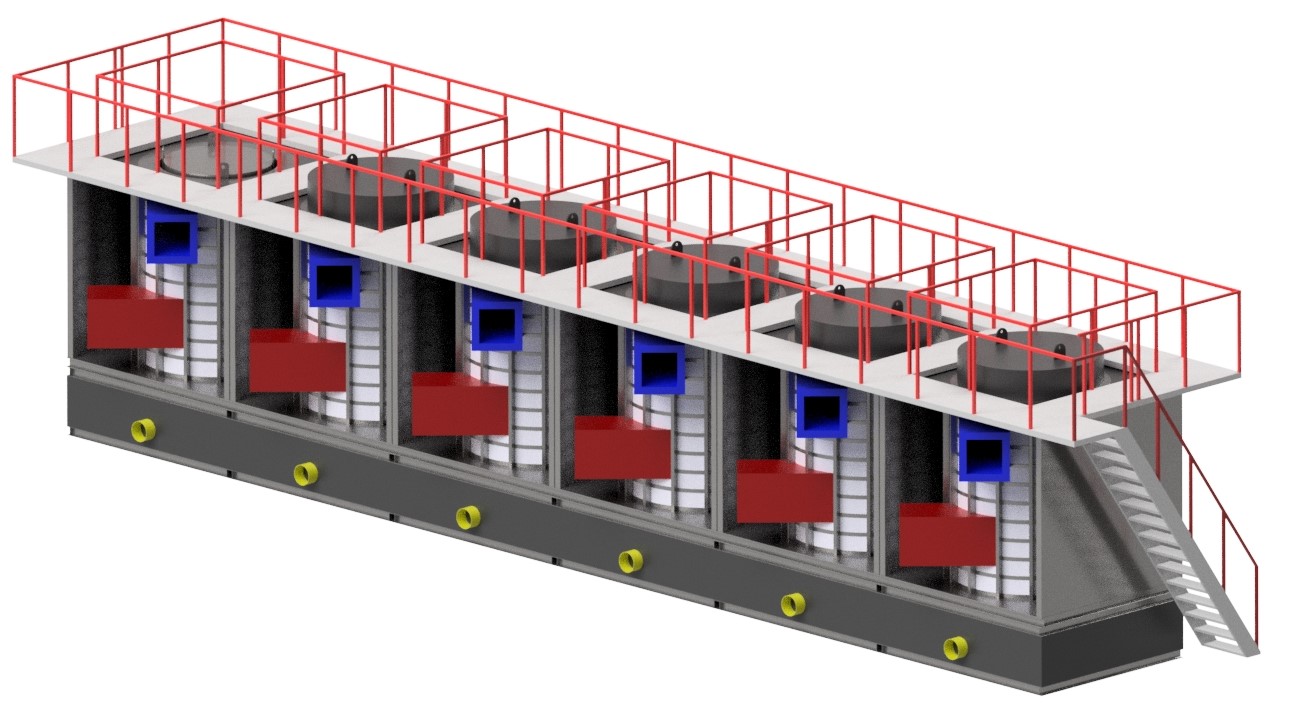
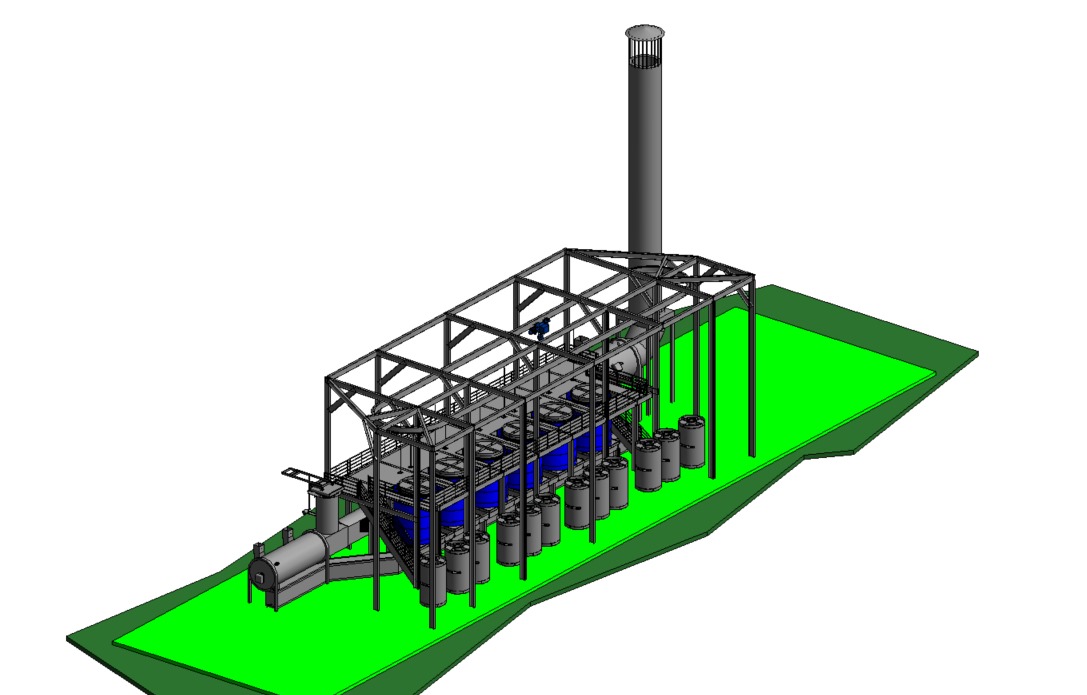
Pyrolysis chambers with stationary retorts
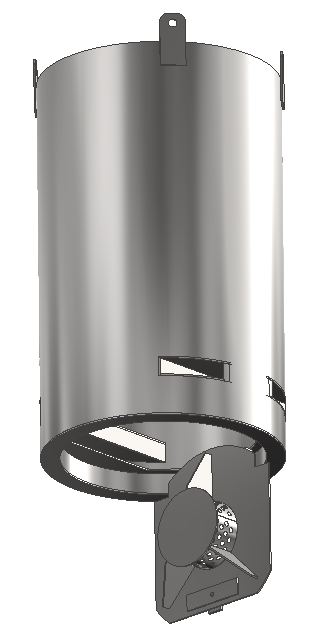
Removable retort
4. Drying chambers with replaceable baskets – configured depending on the selected pyrolysis chamber configuration;
5. Chimney or induced-draft fan – draft generation and emissions control;
6. Product discharge and stabilization system – forced cooling and preparation for packaging/logistics;
7. ACS / I&C — automation of the processes of loading, neutralization of pyrolysis gases, temperature control, and monitoring of product quality parameters.
V1. MULTI-ECO [Modular / Trolleys]
Modular solution with trolleys and mesh baskets. The system is designed to be supplied as ready for operation as possible for fast commissioning.
- Capacity: 96-144 t/month.
- Advantages: fast installation, easy scaling, readiness for operation in difficult locations.
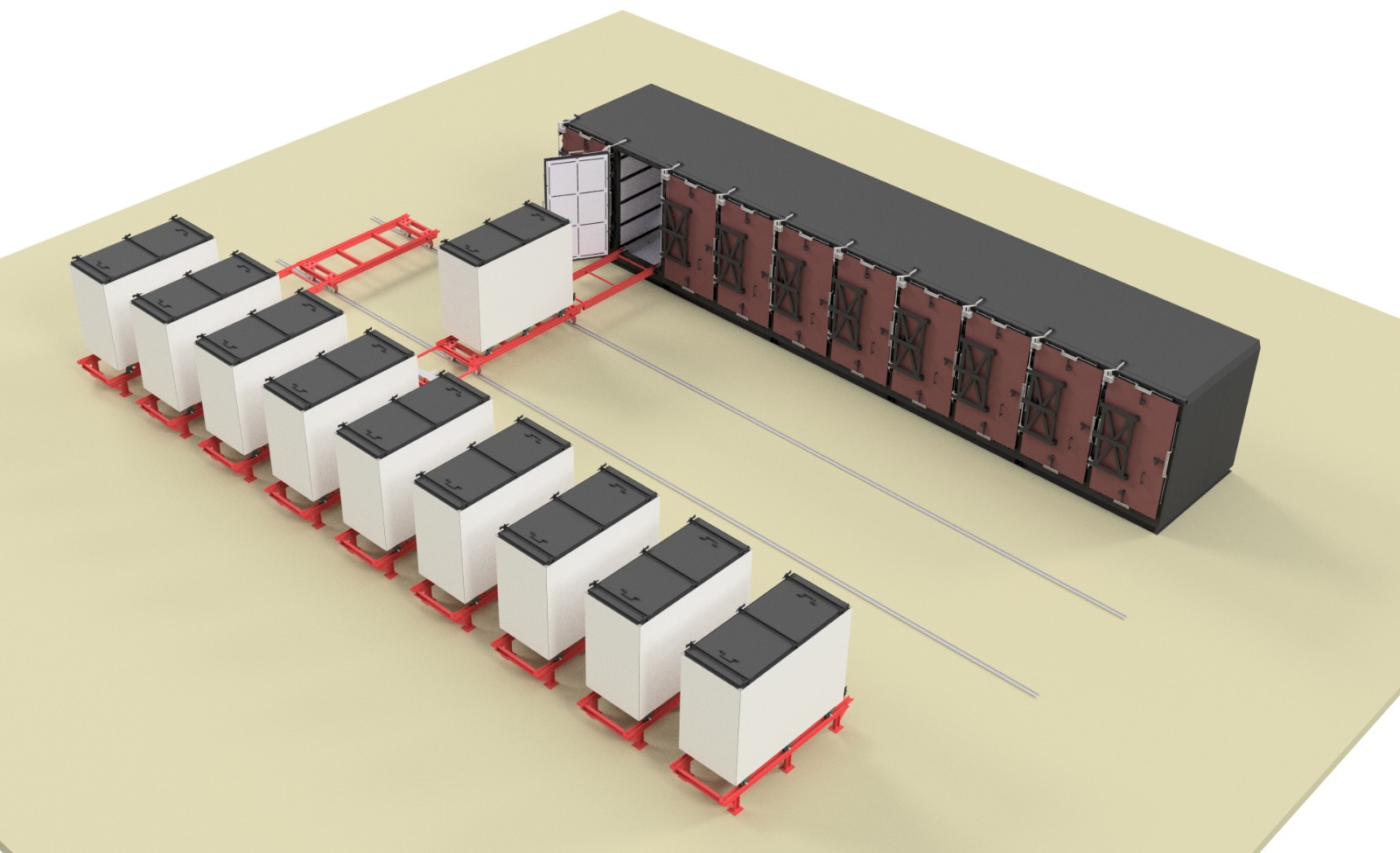
V1. MULTI-ECO [Modular / Trolleys]
V2. MULTI-ECO [Removable Retorts]
Complex with removable retorts and crane-based logistics. It enables high production volumes with flexible production cycle management.
- Capacity: from 150 to 300 t/month.
- Advantages: high loading density; optimal for facilities with developed crane infrastructure.
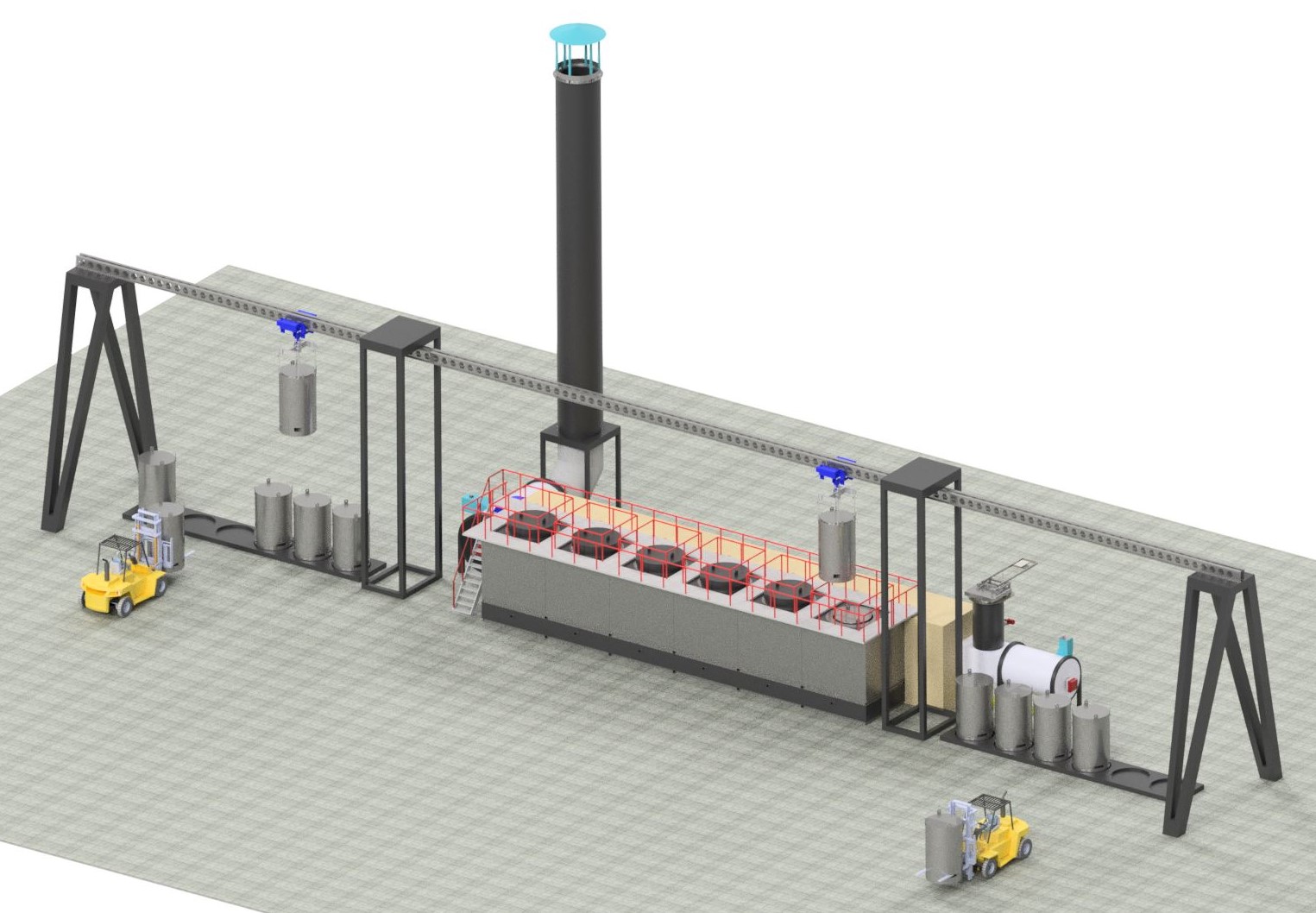
V2. MULTI‑ECO [Removable Retorts]
V3. MULTI‑ECO [Stationary Retorts]
Industrial complex based on large-volume stationary retorts for capital projects with maximum integration into the site infrastructure.
- Capacity: from 200 to 400 t/month.
- Advantages: maximum service life, stable thermal regimes and process automation.
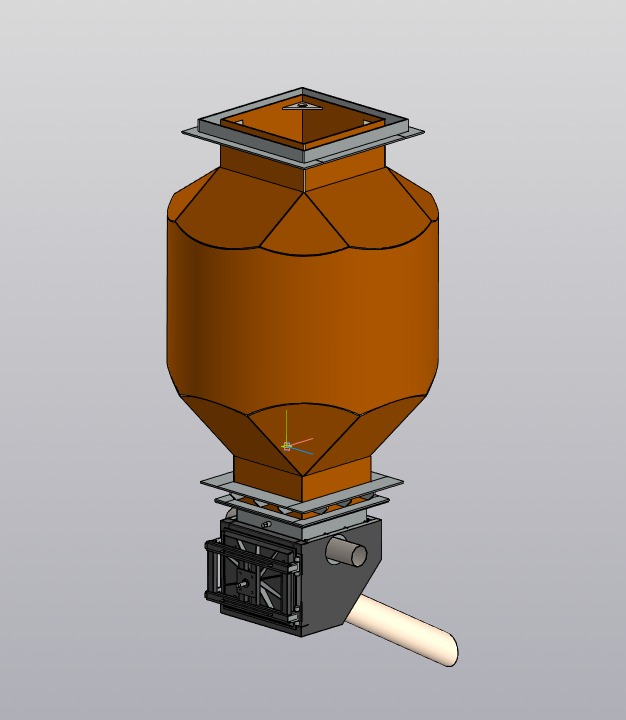
V3. MULTI‑ECO [Stationary Retorts]