Research and development services

Engineering and Scientific Support for Biochar and lump Charcoal, Production Projects

GreenPower provides engineering and scientific services for the development, adaptation, and scale-up of thermochemical processing technologies for biomass and other carbon-containing feedstocks. Our work is built on long-term practical experience, process analysis, laboratory and applied research, engineering design, and implementation support.

We help customers move from uncertainty to a structured technical solution:
from feedstock to process, from process to equipment, and from equipment to industrial scale.
For some projects, the starting point is different:
from target product to feedstock, from feedstock to process, from process to equipment, and then to scale-up.
This approach allows us to reduce technical and investment risks before major capital decisions are made

What GreenPower Offers

GreenPower is an engineering and scientific partner for thermochemical conversion of carbon-containing materials, including slow pyrolysis, carbonization, and related thermal processes. Our core practical expertise is in the carbonization of biomass for the production of biochar and charcoal, supported by process measurements, operating mode analysis, equipment adaptation, and implementation experience.

We support projects involving:

  • biomass feedstocks from agriculture, forestry, and wood processing
  • polymer waste
  • rubber waste and tires
  • sludge and other carbon-containing industrial waste streams

Our R&D Philosophy

Stable product quality and repeatable process performance must come first.
That is why GreenPower does not begin with “equipment sales.” We begin with feedstock behavior, process requirements, and measurable technical constraints. Only after that do we define the most suitable technology path and engineering solution.

Our principle is simple: first measure and test, then design and implement.

Main Service Packages

1. Raw Material & Feasibility

This package is designed for the first technical screening of a project. It includes:

  • identification of key feedstock characteristics
  • initial assessment of suitability for thermal processing
  • early detection of risks and process bottlenecks
  • recommendations for feedstock preparation
  • optional expansion of the study depth depending on project requirements

Typical analysis may include:

  • moisture content
  • ash content
  • foreign impurities
  • particle size distribution
  • energy value
  • bulk density of feedstock
  • bulk density of produced biochar

2. Process Development

This package is focused on process chain design, operating modes, and technology selection. It may include:

  • development of the feedstock preparation chain: size reduction, separation, drying, densification, and preparation for pyrolysis
  • selection of the most suitable pyrolysis or carbonization route for the specific feedstock
  • process sequence from prepared feedstock to pyrolysis, biochar cooling, and packaging
  • estimation of technology performance, carbon yield, product quality, and energy efficiency
  • energy balance evaluation of the selected system

It can also include a preliminary review of certification opportunities in the target region, depending on project goals and intended markets, including:

  • biochar certification frameworks such as EBC, IBI, and WBC
  • carbon certification pathways such as Puro.earth, Verra, and Carbonfuture
  • regulatory considerations such as EU Organic, REACH, and CE
  • government-related frameworks such as CRCF and EPA-related context where relevant

3. Engineering & Implementation

This package is intended for customers who are ready to move from technical concept to real equipment and plant execution.

It includes:

  • equipment design or adaptation for specific feedstock and product targets
  • 3D modeling
  • testing of components and full assemblies
  • quality control of manufactured elements
  • preparation for production, including process documentation and QC requirements
  • commissioning support
  • analysis and resolution of current production problems in charcoal or biochar operations

4. Royalty / Partner Manufacturing

For selected regions and qualified partners, GreenPower also offers a royalty-based scaling model.

This direction may include:

  • rights and working conditions for regional partner manufacturing
  • detailed design documentation package
  • drawings, material specifications, and component specifications
  • manufacturing process guidance
  • production quality control support
  • video instructions and technical operating documentation
  • online and offline technical support
  • free component modernization, including automation updates, within the program conditions

Why Customers Work with GreenPower

Practical experience combined with engineering depth

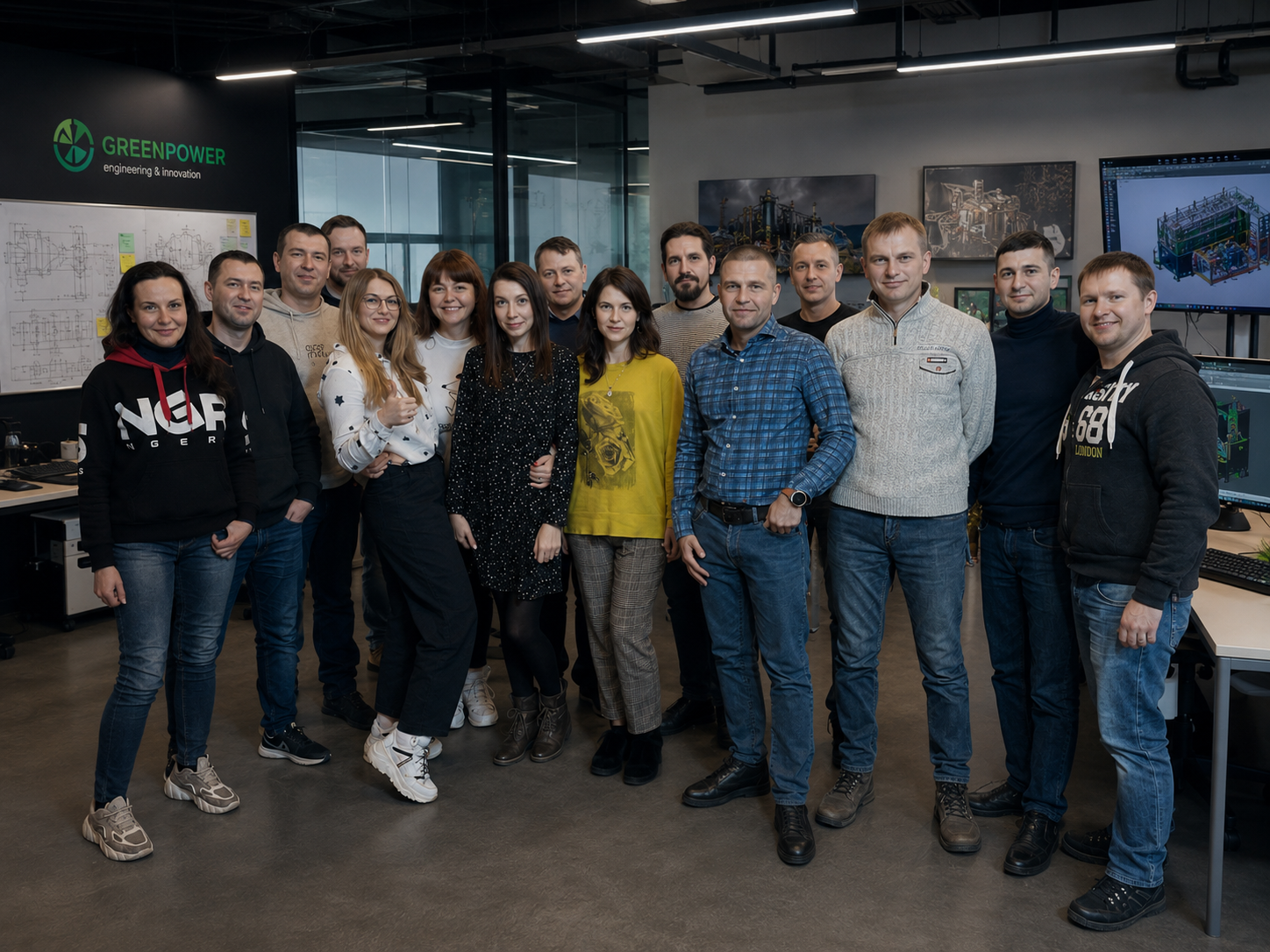
GreenPower’s communication strategy is built around long-term practical experience and a strong project team, covering the path from feedstock analysis and laboratory research to engineering, implementation, scale-up, and even patent-linked or royalty models where applicable.

Broad feedstock coverage

We work not only with wood and agricultural biomass, but also with polymers, rubber waste, sludge, and other carbon-containing materials.

Lower technical and investment risk

Before recommending equipment, we evaluate feedstock properties, process behavior, operational risks, and expected product outcomes. This reduces the risk of choosing the wrong technology or overspending on unsuitable equipment.

Focus on environmental and regulatory readiness

Where required, GreenPower can include analysis of heavy metals, PAHs, and the general possibility of future certification or regulatory alignment for the project.

More than an equipment supplier

GreenPower supports customers from feedstock and process logic to stable product quality and industrial scale-up. This is a different role from a standard equipment vendor.

How We Work

Step 1. Feedstock sample and project brief

The project begins with basic project information and, where needed, a feedstock questionnaire and sampling instructions.

Step 2. Analysis

We assess the critical characteristics of the feedstock and define the main technical constraints and opportunities.

Step 3. Process logic and operating modes

We determine the relevant preparation steps, process sequence, thermal operating logic, and likely product behavior.

Step 4. Technical report and recommendations

We prepare conclusions, recommendations, and, depending on the package, performance estimates, engineering direction, or implementation strategy.

Step 5. Engineering and implementation

If the project moves forward, GreenPower supports design adaptation, production preparation, equipment testing, and launch support.

Typical Reasons Customers Contact Us

Customers usually come to GreenPower when they need:

  • a first technical opinion on whether a feedstock is suitable for pyrolysis or carbonization
  • a clearer understanding of risks before equipment investment
  • support in selecting the right process chain
  • engineering adaptation for a difficult feedstock or product target
  • troubleshooting for unstable product quality, poor yield, or weak energy efficiency
  • a partner for scaling technology into manufacturing or regional deployment

Entry Offers

To make the first step easier, GreenPower can start with simple entry formats such as:

  • a free preliminary feedstock assessment based on a questionnaire
  • a fixed “Lab Test + Technical Conclusion” package
  • a short regional screening call for royalty or partner manufacturing opportunities

Contact GreenPower

If you are planning a biochar, lump charcoal, or carbon-processing project and need a technically grounded starting point, GreenPower can help you evaluate the feedstock, define the process, and move toward a practical engineering solution.

Send us your feedstock type, target product, and project region — and we will define the most suitable next step.

Discuss Your Carbonization Project

Our engineering team will review your requirements and propose the appropriate system.