
GreenPower continues to modernize the Automatic Control System (ACS) for the EKKO-2 pyrolysis furnace. The primary goal of the ACS implementation is to reduce personnel involvement in the furnace operation, aiming to optimize control, minimize human error, and enhance the stability of production processes.
As part of the above-mentioned upgrades, automatically controlled air dampers have been developed for the furnace and the afterburner. These dampers ensure automatic and safe regulation of air supply to both the furnace and the afterburner, thereby directly influencing the combustion process of pyrolysis gas in the furnace and its complete oxidation in the afterburner.
The objective is to ensure stable furnace operation, eliminate emergency conditions and operator errors, and prevent harmful atmospheric emissions, including products of incomplete combustion of pyrolysis gases.
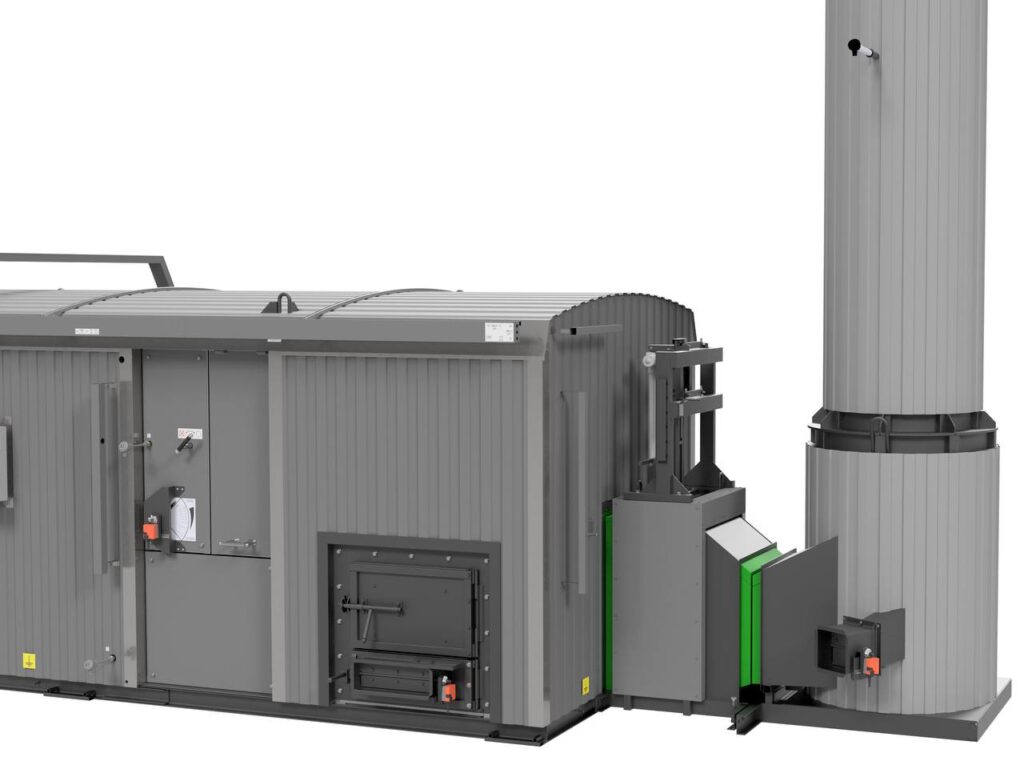
1. Why it is important
a. Controlling the combustion air supply to the furnace and afterburner is essential for safe and efficient operation: both excess and insufficient air reduce efficiency and can lead to unstable operating modes.
b. Monitoring the furnace temperature within the range of 900–1200 °C allows for determining the onset of gas-vapor combustion and prevents overheating and structural damage.
c. Regulating the air volume in the afterburner maintains optimal conditions for the complete combustion of excess gas-vapors and minimizes harmful emissions.
2. What is being developed
a. Structural components for the furnace and afterburner that enable automatic regulation of air volume for combustion and post-combustion of pyrolysis gas within the system using ACS elements.
b. An ACS for operating the pyrolysis gas combustion and post-combustion system based on temperature sensor signals and control of air damper actuators.
3. Established requirements for adjustable air dampers
a. Rigid and reliable mounting of the actuator to the damper body using a standard mounting kit corresponding to the actuator size.
b. Compatibility of the damper shaft with the actuator (in terms of diameter and shape) to ensure precise torque transmission.
c. Capability to adjust the initial (zero) position of the damper.
d. Convenient and safe access for maintenance and connection of the electric actuator (power and feedback cables).
e. A rotary actuator with feedback is used as the electric drive.
f. Provision for manual damper adjustment when the electric actuator is disconnected.
4. Achieved effects
a. Process Efficiency. Increased stability and efficiency of pyrolysis gas combustion and post-combustion, which directly impacts the overall furnace productivity.
b. Overheating Protection. Reduced risk of overheating and protection of structural components through temperature control, which minimizes the risk of unscheduled furnace shutdowns.
c. Environmental Control. Maintaining optimal post-combustion modes to minimize harmful emissions.
d. Reduction of Human Error. Increased process automation and improved operator convenience through the ACS and the notification system.
For all inquiries regarding the implementation of this automation system, including the modernization of existing equipment, please contact us via the website’s contact forms.

 Loading...