
GreenPower is pleased to announce the successful start of a new biochar production project in Nigeria. This project marks an important step in the development of industrial biochar production in Africa and demonstrates how local biomass resources can be transformed into a high-value carbon product through controlled carbonization technology.
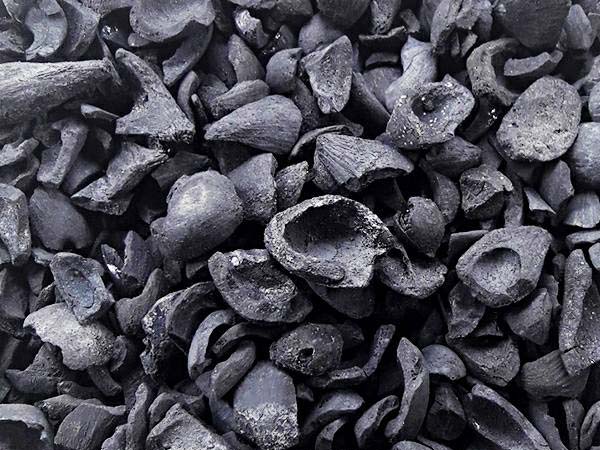
The project is based on the continuous carbonization furnace BIO-KILN-1, designed for the production of high-quality biochar from bulk biomass feedstock. The main raw material used in this project is palm kernel shell (PKS) — a by-product of palm oil processing that is widely available in Nigeria and other palm-producing regions of Africa.
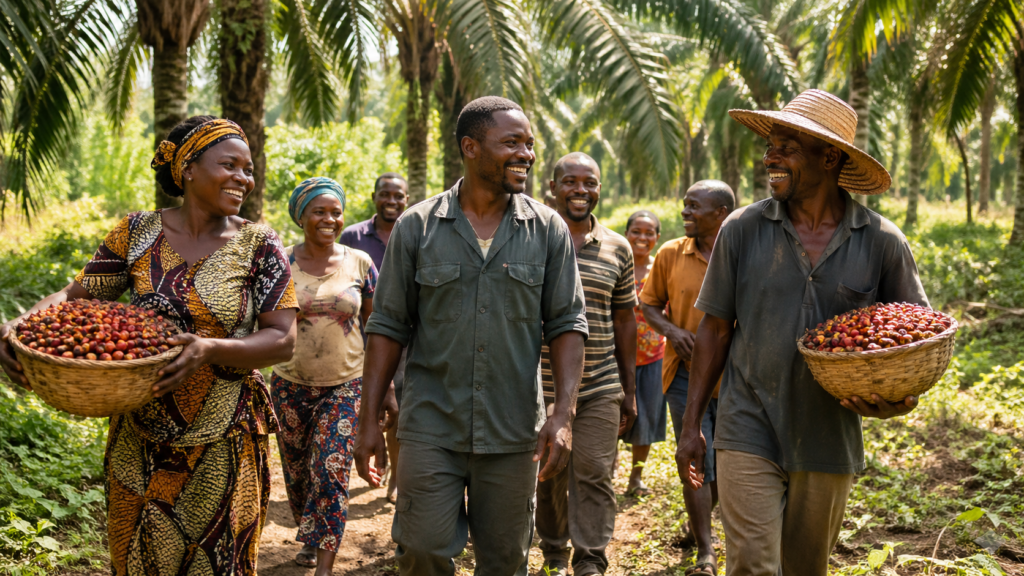
From Palm Waste to High-Value Biochar
Palm kernel shell is often treated as agricultural waste or low-value biomass. However, when processed through controlled carbonization, PKS can become a valuable source of stable carbon.
Using BIO-KILN technology, this biomass can be converted into biochar with a wide range of potential applications:
- soil improvement and agricultural use;
- industrial carbon applications;
- filtration and adsorbent materials;
- carbon-focused environmental projects;
- potential carbon removal and certification-oriented projects.
This approach supports the transition from simple biomass disposal to a more advanced model of waste valorization, where local agricultural residues become part of a circular carbon economy.
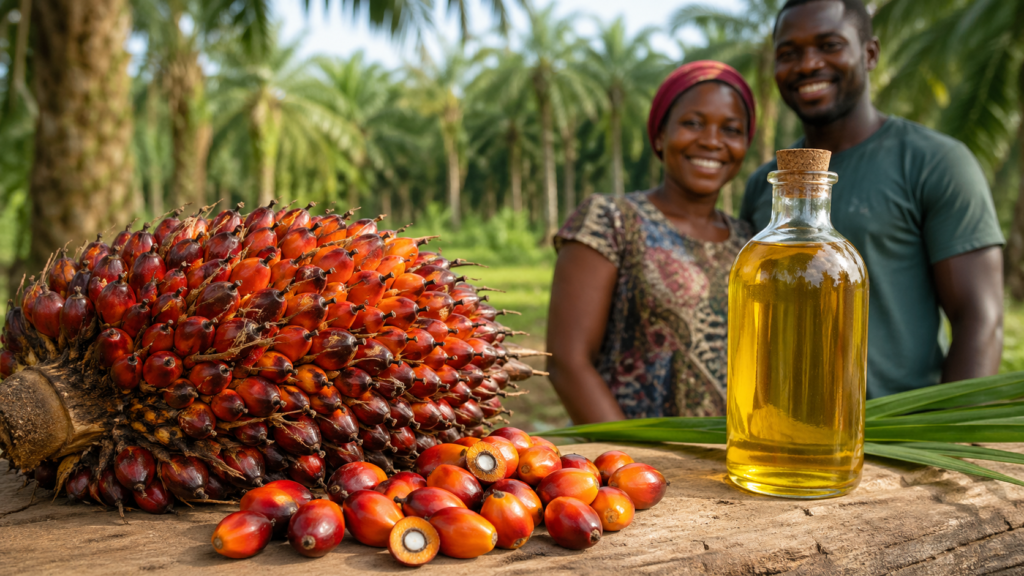
Why BIO-KILN Is Important for Biochar Quality
For biochar production, equipment alone is not enough. The final product quality depends on several key factors:
- feedstock type and moisture;
- fraction size and bulk density;
- carbonization temperature;
- residence time;
- process stability;
- oxygen control;
- automation and monitoring;
- proper handling of pyrolysis gases.
BIO-KILN is designed as a continuous carbonization system where the process can be controlled more consistently compared to simple or low-automation solutions. This is especially important when the target is not only charcoal production, but stable, high-quality biochar suitable for certification-oriented and industrial applications.
Modern biochar projects require measurable and repeatable process conditions. For markets connected with EBC, IBI, Puro.earth, Verra, MRV systems and carbon removal credits, the production process must be controlled, documented and technically justified. This follows GreenPower’s current marketing and engineering logic: the client does not only buy equipment, but a technological system for stable carbon product production.
Biochar Production in Nigeria: A Strategic Opportunity
Nigeria has significant potential for biochar development due to the availability of agricultural residues, especially from the palm oil industry. Palm kernel shell is a concentrated biomass resource that can support decentralized biochar production close to the source of raw material.
The launch of BIO-KILN-1 in Nigeria creates several important opportunities:
- conversion of palm industry residues into a commercial carbon product;
- reduction of uncontrolled biomass waste;
- creation of local jobs and technical expertise;
- support for sustainable agriculture;
- development of industrial carbon products;
- preparation for future carbon credit and certification-oriented projects.
For Africa, this project is not only about equipment installation. It is about building a practical model where local biomass can be processed into a stable carbon material with environmental and economic value.
Environmental and Economic Impact
Biochar can contribute to sustainable development in several ways. In agriculture, it may help improve soil structure, water retention and nutrient efficiency. In industrial applications, biochar and biocarbon can become renewable carbon materials. In carbon removal projects, properly produced and verified biochar may become part of long-term carbon storage strategies.
For Nigeria and other African countries with strong agricultural sectors, this creates a new direction for biomass-based development:
local biomass → controlled carbonization → high-quality biochar → agriculture, industry and carbon-focused markets.
This model is especially relevant for regions where biomass residues are available in large quantities but are not yet fully used as industrial resources.
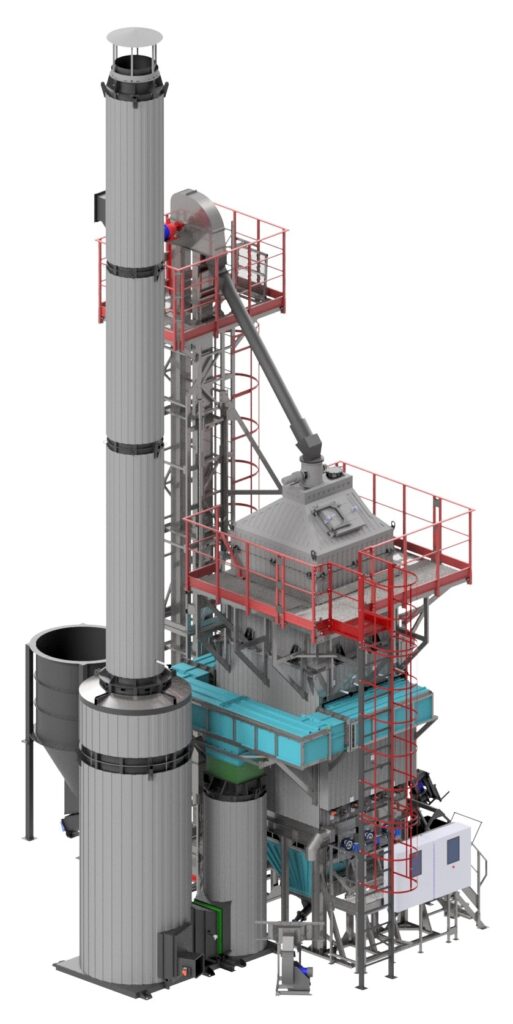
GreenPower’s Role in the Project
GreenPower supplied BIO-KILN technology and supports the project through its experience in carbonization, process control and industrial biomass conversion.
The key value of GreenPower’s approach is that the company does not consider the furnace as a separate unit. The result of a biochar project depends on the full technological chain: feedstock preparation, drying, carbonization, cooling, automation, operator discipline, product quality control and project economics.
This is why each serious biochar project should be evaluated based on real feedstock data and target product requirements. For large-scale or certification-oriented projects, GreenPower recommends process validation before final investment decisions.
A Step Forward for Biochar in Africa
The start of BIO-KILN-1 in Nigeria demonstrates how biochar production can become a practical tool for sustainable industrial development in Africa. The project combines local biomass resources, modern carbonization technology and growing global demand for stable carbon products.
As the biochar market continues to grow, projects based on controlled technology, reliable feedstock and clear product quality targets will have the strongest potential.
GreenPower is proud to support this development and to contribute to the creation of sustainable carbon production systems in Africa.
GreenPower — industrial carbonization technology for a sustainable future.

 Loading...