
GreenPower announces that its BIO-Carbon-3 continuous carbonization system has successfully completed the technical assessment procedure under the Rainbow Pyrolysis Vetting Program.
Following a review of the technical documentation, operational data, and laboratory test results, the BIO-Carbon-3 model received the official status:
Vetting Decision: Approved
Rainbow Vetted / Endorsed
The decision was issued on July 8, 2026, under the Biomass Carbon Removal and Storage — BiCRS V1.1 methodology, methodology identifier RBW-BICRS-GEN-V1.1, and the Infrastructure and Machinery Version 1.4 assessment module — RBW-MOD-INFRA-V1.4.
What Rainbow Approval Means
The approved status confirms that the design, control system, and technical capabilities of BIO-Carbon-3 enable the unit to be operated in accordance with the requirements of the Rainbow methodology for biomass carbon removal and long-term carbon storage projects.
For developers of biochar and carbon-removal projects, this means that BIO-Carbon-3 was designed from the outset to meet requirements relating to:
- controlled pyrolysis;
- recording and retention of temperature data;
- reactor airtightness;
- capture and thermal treatment of pyrolysis gases;
- stability of process parameters;
- access to data for monitoring and auditing;
- production of biochar with the required degree of carbonization.
Equipment approval significantly simplifies the preliminary technology selection process for projects planning to operate under the Rainbow Standard methodology.
However, compliance of a specific production facility with the methodology must still be confirmed separately, taking into account the actual feedstock, operating conditions, biochar quality, monitoring system, and organization of the production process.
BIO-Carbon-3 Characteristics Assessed
As part of the Rainbow assessment procedure, specialists reviewed the unit’s technical specifications, documentation, temperature logs, equipment specifications, and independent laboratory analyses of biochar.
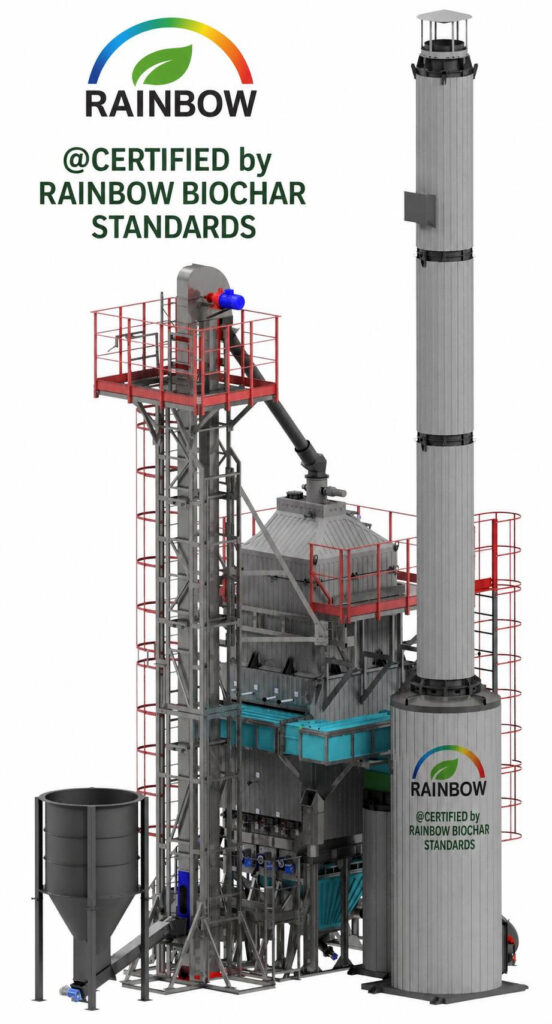
BIO-Carbon-3 is a vertical continuous-operation unit with a moving feedstock bed and indirect heating. Prepared and dried biomass enters the reactor by gravity, passes through a controlled carbonization process, and is discharged into the cooling system.
One of the key features of the technology is the absence of direct contact between atmospheric oxygen and the feedstock inside the reactor. Indirect heating reduces oxidative carbon losses, increases product yield, and helps maintain more stable biochar characteristics.
The assessment confirmed the following system capabilities:
- continuous dry pyrolysis in a vertical reactor;
- target product carbonization temperature range of 450 to 800°C;
- temperature monitoring using 17 thermocouples installed in the reactor, hoppers, gas ducts, and thermal oxidizer;
- exportable process temperature logs;
- the ability to provide auditors with access to the WebHMI and remote monitoring system;
- controlled treatment of pyrolysis gases;
- automated process control;
- product quality regulation through a discharge algorithm that takes biochar temperature into account.
The BIO-Carbon-3 production capacity stated in the Rainbow decision is approximately 880–1,650 tonnes of biochar per year, depending on feedstock characteristics, operating conditions, and the required parameters of the final product.
Environmental Control System and Pyrolysis Gas Treatment
Pyrolysis gases from the reactor are directed to a separate high-temperature thermal oxidizer. The system operates at temperatures of up to 1,000–1,300°C and ensures controlled combustion of organic compounds.
The thermal oxidizer design also functions as a high-temperature cyclone, reducing the transfer of fine particles into the exhaust stack. Staged gas oxidation maintains the temperature above the tar condensation zone and reduces the risk of tar accumulation inside the process equipment.
Rainbow separately confirmed the presence of a pyrolysis gas capture and combustion system, the combustion chamber design, and technical solutions intended to ensure complete combustion and prevent the formation of tar deposits.
Confirmation of Biochar Quality
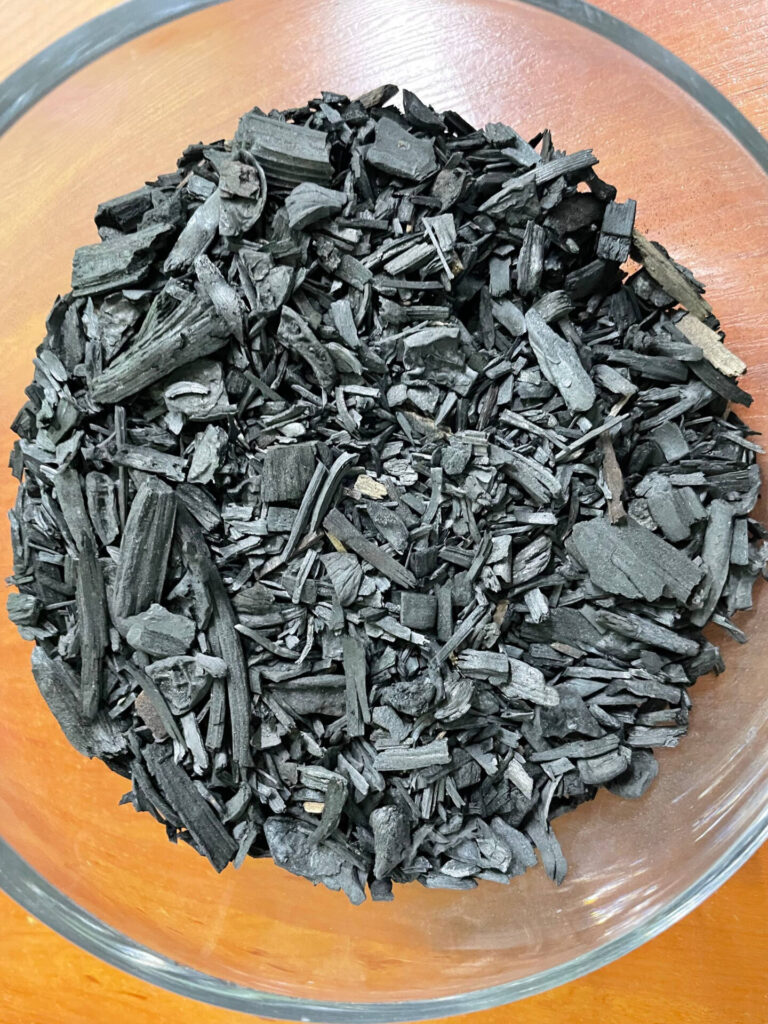
One of the key assessment criteria was the hydrogen-to-organic-carbon ratio, H/Corg. This indicator is used to assess the degree of carbonization and the stability of carbon in biochar.
GreenPower provided independent laboratory analyses of biochar produced from several types of biomass. In all reviewed analyses, the H/Corg value was below the methodology’s maximum threshold of 0.7.
The Rainbow document includes the following results:
- cashew nutshells — H/Corg 0.29
- almond shells — H/Corg 0.31
- wood chips – H/Corg 0.30
Compliance with H/Corg < 0.7 was confirmed by independent laboratory testing of the submitted samples.
Monitoring and MRV Readiness
Modern biochar production projects require not only high-quality equipment but also the ability to verify the actual parameters of each production cycle.
The BIO-Carbon-3 automated control system records process temperatures, stores operational logs, and exports data for further analysis.
Depending on the project configuration, GreenPower can provide:
- remote monitoring through WebHMI;
- data export from the control software;
- manual and automated report generation;
- read-only auditor access;
- configuration of data sets, reporting frequency, and export formats.
This digital infrastructure provides the foundation for building an MRV — Monitoring, Reporting and Verification — system at a specific production facility.
An Important Milestone in the Development of GreenPower Technology
Successfully completing the Rainbow Vetting procedure is an important confirmation of GreenPower’s strategy: to develop not individual pyrolysis furnaces, but integrated technological systems for the production of controlled carbon products.
BIO-Carbon-3 combines:
- continuous carbonization;
- indirect biomass heating;
- automated control;
- controlled combustion of pyrolysis gases;
- recording of process parameters;
- integration capabilities for feedstock preparation, drying, cooling, stabilization, and product packaging.
The approved status strengthens the readiness of BIO-Carbon-3 for use in international projects involving biochar production, industrial biocarbon production, and the removal of CO₂ from the atmosphere.
Meta Description: GreenPower’s BIO-Carbon-3 continuous carbonization system has received Approved status under the Rainbow Pyrolysis Vetting Program in accordance with the Biomass Carbon Removal and Storage BiCRS V1.1 methodology.

 Loading...